
Let’s Talk About 💩 , Baby!
Everyone’s favorite topic!
Ok, it’s not, but the #1 topic of discussion on any online forums about ostomy reversals is poop. The texture. How much of it you’re experiencing. Holding it back. Speeding it up. Slowing it down. Getting a poop started after surgery. All of it. And we’ll be speaking frankly about it on this page so that folks who need to understand how the surgery is impacting their body have the information that they need.
DISCLAIMER: This page is not intended to be medical advice. We present information that’s been shared by fellow ostomy reversal patients, and that has been gathered from trusted medical sources (linked where possible). In all instances, the best advice is to speak with your medical care team.
The poop won't stop! What can I do?!
Short answer: Contact your care team for their advice. Do not self-medicate with anti-motility medications or consume significant amounts of fiber without their advice, as it can do more harm than good, especially in the early stages of healing.
It’s normal to have diahrrea right after surgery, and for even a few weeks (or months) after. You and your doctor can decide when it’s time to take action to slow things down.
In general, diahrrea is caused by one or more of these factors.
Disuse proctitis, or extreme inflammation, immediately after surgery. Typically, only time will allow this to reduce and stabilize.
Too much/too little fiber.
Food triggers.
Right after surgery, most patients experience some degree of diahrrea; this is normal. If it continues, speak with your doctor about when the time is right to adjust this flow with medication or fiber.
Food can be your worst enemy or best friend. Learning which foods trigger your bowel are important, as is understanding which ones calm it down. Over time, you’ll learn how to regulate your bowel using the food that you eat, sometimes coupled with appropriate medications.
What is Clustering?
Clustering is a common symptom after ostomy reversal surgery, where a patient has multiple bowel movements within a short period of time. This often occurs because the bowel has been reconnected through an anastomosis, and the rectum may have reduced capacity to store stool. As a result, the body may empty in several small, frequent episodes rather than one complete movement.
Clustering can be frustrating and disruptive, especially during the early stages of recovery. Management may include dietary adjustments, antidiarrheal medications, and pelvic floor therapy. Over time, many patients experience improvement as the bowel adapts and function becomes more predictable.
What is 'toilet yoga'?
Sometimes when things will not move, changing your position on the toilet seat can have an impact, as it changes the angle of the bowel, rectum and anus and can create a wider path.
Can’t get started?
Your rectum may be unable to relax to ‘let go’. Focus on your pelvic floor muscles and on allowing them to relax. You may have so much tension in these muscles that you can’t let go. (This may require Pelvic Floor Therapy to address this issue).
Rock left to right on the seat, gently. Many people report that when they lean left, they suddenly need to go. (There is likely a nerve being stimulated by this motion, but this is anecdotal).
Rock front to back, breathing in as you rock back, and out as you rock forward. This provides a gentle, downward pressure on your pelvic muscles on the rock forward that can stimulate things.
Basically, ‘just sitting there’ when nothing is happening isn’t likely to be productive. But, moving around in various motions may cause the bowel alignment to cause your bowels to open and evacuate.
See Squatty Potty entry for other ‘positional’ ideas.
What is a Squatty Potty?
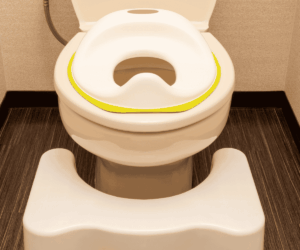 A stool that puts the legs in an angled position, opening up the bowel to create a better, more natural position for defacation.
Using one of these stools places your legs in a position that is similar to an Asian squat toilet, one of the best positions for efficiently moving the bowels.
What is 'peanut butter poop'?
Sometimes the stool has the texture of soft peanut butter, making it difficult to hold back. This texture is problematic in that it can be difficult for a compromised rectum to hold back. The use of fiber to firm things up can alleviate this textural issue.
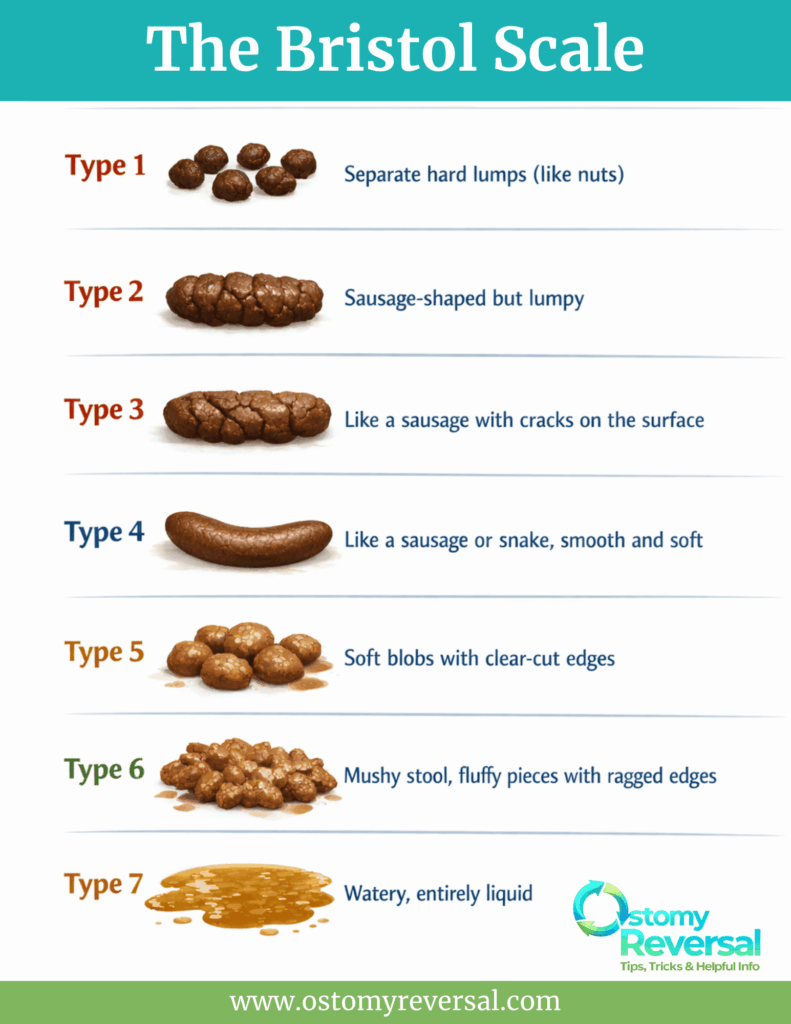
What is the Bristol scale?
A scale that allows you to speak with your doctor more effectively about how your output looks.
Types 3 and 4 are ideal. Type 1 – 2 can indicate dehydration, Types 5 – 6 indicate diahrrea.
What is TAI, TransAnal Irrigation?
Typically used by diagnosed LARS (Lower Anterior Resection Syndrome) patients.
Transanal irrigation (TAI) is a treatment used to help manage bowel dysfunction, including conditions like lower anterior resection syndrome (LARS). It involves introducing warm water into the rectum through a small catheter to stimulate bowel emptying in a controlled way. This process helps clear the lower bowel, reducing symptoms such as urgency, frequency, and fecal incontinence.
TAI is typically performed at home using a specialized system and can be done daily or several times per week. With regular use, many patients experience more predictable bowel patterns and improved confidence. Healthcare providers guide patients on proper technique and individualized routines.
How can a bidet be useful?
The #1 advice when asking the question, ‘how can I alleviate the soreness I’m getting from wiping?’ is, ‘get a bidet!’.
A bidet can be very helpful for patients recovering from ostomy reversal surgery, especially as bowel habits adjust. During this time, frequent bowel movements, urgency, or irritation can make traditional wiping uncomfortable. A bidet provides gentle, effective cleansing with water, which can reduce skin irritation, protect sensitive tissue, and improve overall hygiene.
Using a bidet can also help prevent soreness and breakdown of the perianal skin, which is common during recovery. Many patients find it more comfortable, efficient, and reassuring as they regain confidence in managing their bowel routine.
Some people even use the bidet as a gentle, shallow colonic.
What is Lower Anterior Resection Syndrome, or LARS?
Lower Anterior Resection Syndrome (LARS) is a condition that can occur after rectal surgery, particularly when part of the rectum is removed and the bowel is reconnected through an anastomosis. Because the rectum normally stores stool, its reduced capacity can lead to changes in bowel function. Common symptoms include frequent bowel movements, urgency, clustering, and fecal incontinence.
The severity of LARS varies, with some patients experiencing mild symptoms and others facing more significant challenges. Treatment may include dietary changes, medications, pelvic floor therapy, and supportive strategies to help improve bowel control and quality of life.
See the Lower Anterior Resection Syndrome page.
How can GLP-1s be helpful for LARS patients with overactive bowels?
GLP-1 receptor agonists (GLP-1s), commonly used for diabetes and weight management, are being explored as a potential option for patients with Lower Anterior Resection Syndrome (LARS).
These medications can slow gastric emptying and intestinal transit time, which may help reduce stool frequency and urgency—two common symptoms of LARS. By promoting more gradual movement through the digestive tract, GLP-1s may improve stool consistency and give patients better control.
While early experiences are promising, GLP-1s are not yet a standard treatment for LARS. Patients should discuss risks, benefits, and appropriateness with their healthcare provider before use.
Why does it hurt when I poop?
It can hurt to have a bowel movement after ostomy reversal surgery because the body is adjusting after the bowel has been reconnected through an anastomosis. The rectum and anal muscles may be more sensitive, especially if they have not been used regularly. You may find that your rectum aches after a large bowel movement, or after a clustering episode. (Clustering is when you have frequent bowel movements one after the other over a period of time, often hours).
Frequent bowel movements, loose stools, and irritation of the perianal skin can lead to burning or discomfort. In some cases, inflammation or small tears (anal fissures) may develop. As healing progresses and bowel patterns stabilize, this discomfort usually improves with time, proper hygiene, and supportive care.
Speak to your doctor about any pain you are experiencing so that they can assess if this is normal, healing-related pain, or a sign of something more serious. Any sudden, severe pain should be considered a medical emergency.
I'm so gassy!!! It's embarrassing. What can I do?
After ostomy reversal surgery, patients often experience increased gas as the digestive system readjusts. The bowel has been reconnected through an anastomosis, and it may take time for normal digestion and bacterial balance to stabilize. Changes in gut motility and the reintroduction of certain foods can also contribute to gas production. Additionally, swallowing air while eating or drinking can increase bloating. This is usually temporary and improves as the body adapts.
Some people have severe gas that continues well past the healing period. This may be the result of an inbalanced gut biome. Speak with your doctor about food and supplements that may be of help, such as prebiotics and probiotics.
My backside really burns... what can I do?
After ostomy reversal surgery, the anus may burn due to frequent bowel movements and loose stools as the digestive system adjusts. When the bowel is reconnected, stool often passes more quickly and may be more acidic or irritating. This can be especially true if the ileum has been compromised, as it is responsible for bile absorption.
This can inflame the sensitive perianal skin, especially with repeated wiping. Temporary irritation is common, but using gentle hygiene methods, bidets, barrier creams, and allowing time for healing can help reduce discomfort.
See our Shopping page for recommendations.
Why are my poops so skinny?
After ostomy reversal surgery, stools may appear thinner or “skinny” as the bowel adjusts to being reconnected. Temporary swelling, changes in muscle coordination, or reduced sigmoid and rectal capacity can alter how stool is formed and passed. The anal muscles may also be tighter or less coordinated at first. In most cases, this improves as healing progresses. However, persistent narrow stools should be discussed with a doctor to rule out a stricture, or narrowing of the bowel. (It may be possible to stretch out these tissues manually to widen that stricture).
What can I do for constipation?
Constipation after ostomy reversal surgery can occur as the bowel adjusts to its new function following an intestinal anastomosis. Treatment often begins with increasing fluid intake (staying well hydrated) and gradually adding dietary fiber to help soften stool and promote regular movement. This must be done under the advice of your doctor in terms of when, and how much fiber should be introduced.
Gentle physical activity, such as walking, can also stimulate bowel motility. In some cases, healthcare providers may recommend stool softeners, mild laxatives, or fiber supplements to support regularity. Establishing a consistent bathroom routine can be helpful. If constipation persists or becomes severe, it is important to consult a doctor to rule out complications such as a stricture.
What is 'Moo to Poo'?
The “moo to poo” process is a simple breathing and bearing-down technique used to help stimulate a bowel movement, especially helpful for people recovering from ostomy reversal or dealing with bowel dysfunction.
The idea is to use your diaphragm (deep belly breathing) rather than straining forcefully. When you sit on the toilet, you take a deep breath in, then slowly exhale while making a low “moo” sound—similar to a gentle hum. This action naturally increases intra-abdominal pressure while keeping the pelvic floor muscles more relaxed, allowing stool to pass more easily.
Unlike straining, which can tighten the pelvic floor and make it harder to go, this technique promotes coordinated movement between the abdomen and pelvic floor. It’s often taught in pelvic floor therapy to improve bowel emptying and reduce discomfort.
Helpful tips:
- Sit with feet elevated (like on a stool) to mimic a squat position
- Relax your abdomen—avoid pushing hard
- Use slow, controlled breathing
- Respond to natural urges rather than forcing it
With practice, the “moo to poo” method can help create a more effective, gentle, and natural bowel movement routine. It really can help!